
Septic System Maintenance Guide
Proper septic system maintenance can extend the life of your system, prevent costly repairs, and protect your family’s health.
Why Septic Maintenance Matters
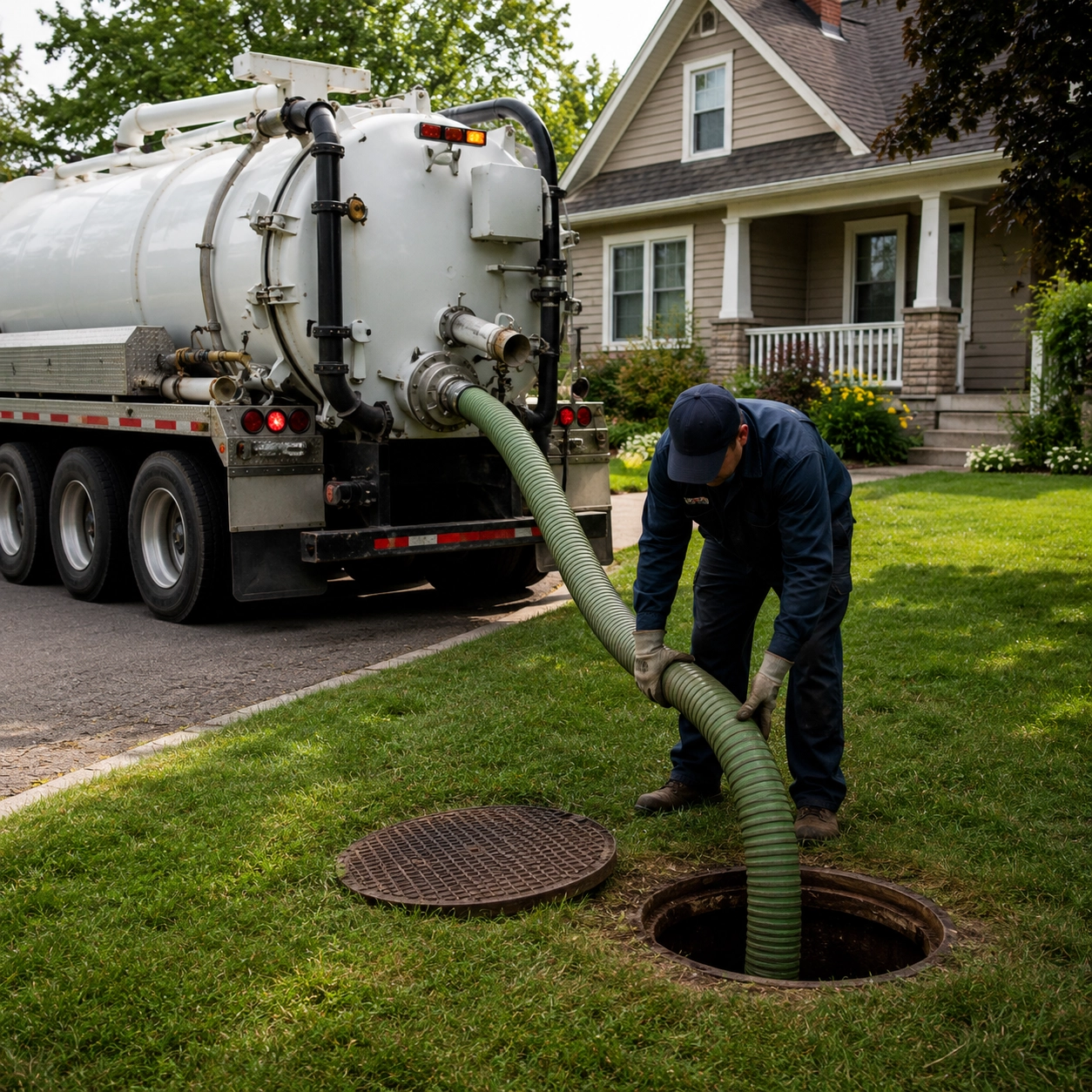
Your septic system works around the clock to safely manage and treat the wastewater generated by your home. Although it operates out of sight, regular maintenance is essential to keeping the system functioning properly and avoiding costly problems.
Routine septic inspections and pumping can help extend the life of your system, improve performance, and reduce the risk of unexpected failures. In many cases, the cost of preventive maintenance is significantly less than the expense of repairing or replacing a failed septic system.
Proper septic maintenance also helps protect your family’s health and the environment. When septic systems fail, untreated wastewater can contaminate nearby groundwater, wells, streams, and other water sources. Regular service helps ensure your system continues to operate safely and efficiently.
In addition, a well-maintained septic system can help preserve property values and prevent unpleasant issues such as sewage backups, foul odors, and soggy areas in the yard.
By investing in routine septic maintenance today, homeowners can help avoid costly repairs tomorrow while protecting their property and the surrounding community.
Need Septic Tank Service
Did You Know?
Replacing a failed septic system can cost thousands of dollars, while routine inspections and pumping are relatively inexpensive preventive measures. Regular maintenance is one of the best investments you can make in your home’s wastewater system.
Call SES today @812-579-5974 to schedule a system checkup or click the button below
How Your Septic System Works
A conventional septic system is designed to safely collect, treat, and disperse household wastewater. Understanding how your system works can help you make informed decisions about maintenance and protect your investment for years to come.
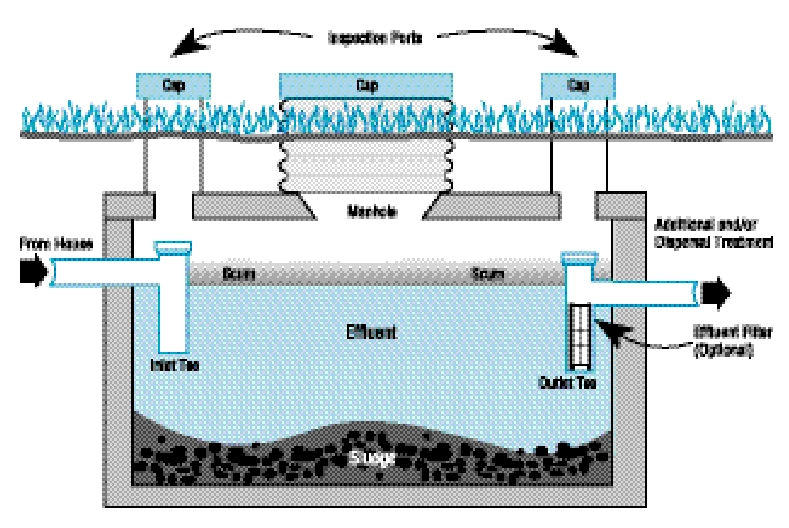
Every time you flush a toilet, take a shower, wash dishes, or do laundry, wastewater flows from your home into the septic tank. Inside the tank, the wastewater separates into three layers:
- Sludge – Heavy solids settle to the bottom of the tank.
- Scum – Grease, oils, and lighter materials float to the top.
- Effluent – The partially treated liquid wastewater remains in the middle layer.
Naturally occurring bacteria inside the tank help break down some of the solid waste. However, these bacteria cannot eliminate all of the accumulated sludge and scum, which is why periodic pumping is necessary.
As new wastewater enters the tank, the effluent flows out to the drainfield. The drainfield consists of a network of perforated pipes that distribute the effluent into the surrounding soil. As the wastewater moves through the soil, naturally occurring microorganisms provide additional treatment by removing harmful bacteria, viruses, and other contaminants before the water returns to the environment.
Problems can occur when excessive water use overwhelms the system or when solids escape the septic tank and enter the drainfield. This can clog the drainfield, reduce its effectiveness, and potentially lead to costly repairs or replacement.
Routine inspections, regular pumping, water conservation, and proper system use all play an important role in keeping your septic system functioning efficiently. With proper care and maintenance, a septic system can provide reliable service for decades.
How Often Should You Inspect and Pump Your Septic System?
Regular inspections and pumping are among the most important steps homeowners can take to protect their septic system and avoid costly repairs. While every household is different, most septic systems should be professionally inspected at least once a year to ensure they are operating properly and to determine whether pumping is needed.
The frequency of septic tank pumping depends on several factors, including the size of the tank, the number of people living in the home, water usage habits, and whether a garbage disposal is used. Larger households typically require more frequent pumping because solids accumulate more quickly in the tank.
As a general guideline, many residential septic tanks require pumping every three to five years. However, the best way to determine the right schedule for your system is through regular inspections performed by a qualified septic professional.
During an inspection, a technician will evaluate the condition of the tank, measure the levels of sludge and scum, inspect key components such as baffles and tees, and look for early signs of potential problems. Catching issues before they become serious can help extend the life of your septic system and reduce the risk of backups or drainfield failure.
Waiting until you experience sewage backups, foul odors, or slow drains often means the problem has already progressed. Routine maintenance is a small investment that can help protect your property, preserve your septic system, and provide peace of mind for years to come.
Inspection & Pumping Timeline
Not Sure Where Your Drainfield Is Located?
Protecting your drainfield is one of the most important steps you can take to extend the life of your septic system. Our experienced team can help identify your system components and provide maintenance recommendations tailored to your property.
Call SES today @ 812-579-5974 to schedule a system checkup or click the button below
What NOT to Flush
Your septic system is designed to treat household wastewater—not serve as a garbage disposal. Flushing inappropriate items can clog pipes, disrupt the beneficial bacteria inside your septic tank, and increase the risk of costly backups or system failure.
As a general rule, the only things that should be flushed down the toilet are human waste and toilet paper. Everything else should be disposed of properly in the trash.
Never Flush:
- “Flushable” wipes
- Paper towels
- Facial tissues
- Feminine hygiene products
- Cotton swabs and cotton balls
- Dental floss
- Cigarette butts
- Disposable diapers
- Condoms
- Kitty litter
- Medications and pharmaceuticals
- Grease, fats, and cooking oils
- Coffee grounds
- Food scraps
- Harsh chemicals and drain cleaners
- Paints, solvents, and pesticides
Many of these materials do not break down properly in a septic system and can contribute to blockages, excessive sludge buildup, or damage to the drainfield. Chemicals and medications may also disrupt the natural bacterial processes that help treat wastewater inside the septic tank.
Developing good flushing habits is one of the easiest and most effective ways to protect your septic system. By being mindful of what goes down your drains, you can help extend the life of your system, reduce maintenance costs, and avoid unexpected repairs.
Good Rule of Thumb
Avoid Harmful Chemicals
Conserve Water to Protect Your Septic System
Water conservation is one of the simplest and most effective ways to help extend the life of your septic system. Excessive water use can overwhelm the septic tank and drainfield, reducing the system’s ability to properly treat wastewater. When too much water enters the system in a short period of time, solids may be carried from the septic tank into the drainfield, increasing the risk of clogs, backups, and premature system failure.
Fortunately, a few simple habits can make a significant difference.
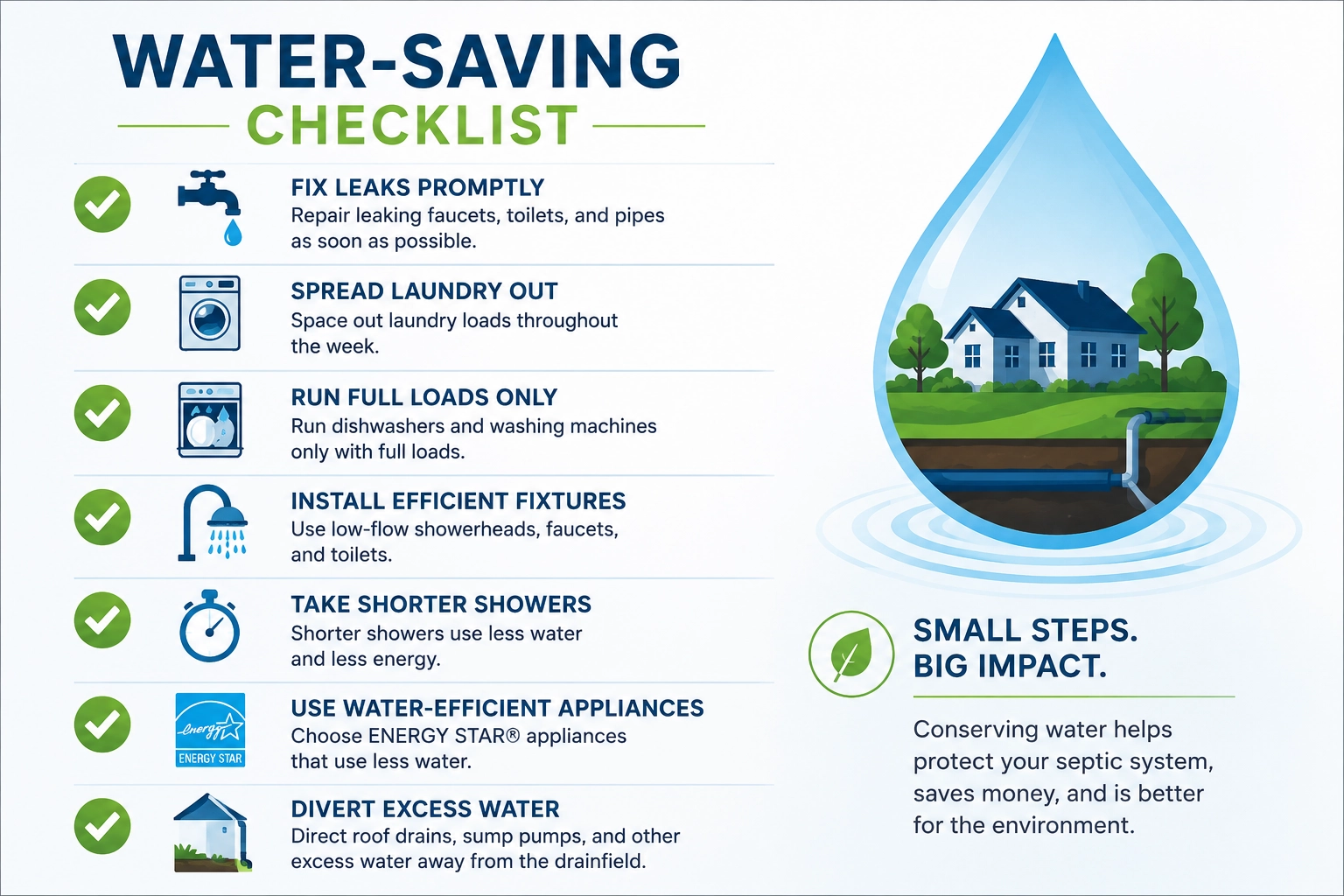
Tips for Conserving Water Around the Home:
- Repair leaking faucets and running toilets promptly.
- Spread laundry loads throughout the week instead of doing multiple loads in a single day.
- Only run dishwashers and washing machines with full loads.
- Install water-efficient showerheads, faucets, and low-flow toilets.
- Turn off the water while brushing your teeth or shaving.
- Take shorter showers whenever possible.
- Choose ENERGY STAR® appliances that use less water and energy.
- Divert roof drains, sump pumps, and other sources of excess water away from the drainfield.
Heavy water use over a short period of time can place unnecessary stress on your septic system. By using water wisely, homeowners can help prevent hydraulic overload, improve treatment efficiency, and reduce the likelihood of costly repairs.
Protecting your septic system doesn’t always require major changes. Small adjustments to your daily routine can have a lasting impact on the health and performance of your wastewater system.
Did You Know?
Using large amounts of water in a short period of time can overwhelm your septic system and force solids into the drainfield, potentially leading to expensive repairs.
Septic System Do’s
✓ Have annual inspections.
✓ Pump regularly.
✓ Repair leaks.
✓ Maintain records.
✓ Know your system location.
Septic System Don’ts
✗ Drive over the system.
✗ Plant trees over the drainfield.
✗ Flush inappropriate materials.
✗ Use septic additives.
✗ Enter a septic tank.
Prefer a printable version?
Download the Complete Homeowner Guide
Want a printable reference? Download our Complete Homeowner Guide for expert septic maintenance tips,
practical advice, and simple steps to help protect your septic system for years to come.
